


In disability compliance work, we spend a lot of time talking about the importance of process—having one, following it, documenting it, defending it. But too often, the human moments inside that process get overlooked—the actual conversations that turn legal obligations into real understanding, practical support, and defensible decisions.
That’s why I want to focus on two of the most powerful conversations in my ADA Interactive Process Hallway®:
- The Foyer conversation, where you determine if the ADA has been triggered and set the tone for everything that follows.
- The Door #2 conversation, where you review the data with all parties and seek out yeses.
When done well, these two conversations can completely change how effective, defensible, and trusted your interactive process becomes.
A Refresher on the ADA Interactive Process Hallway
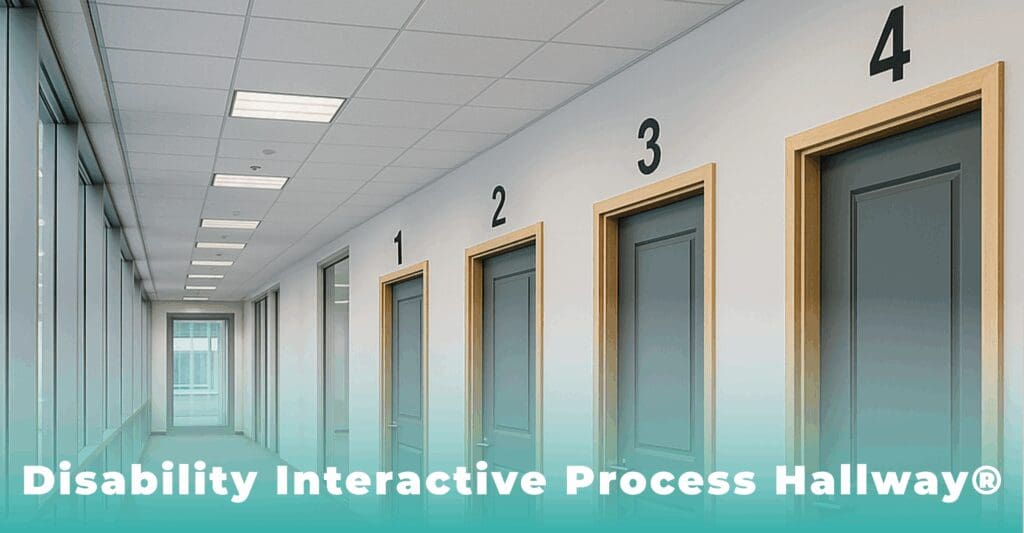
For anyone new to my Hallway protocol, I teach HR and ADA practitioners to think of the disability interactive process as a hallway with four doors. Each door represents a step in a structured framework that replaces guesswork with data-driven, good-faith decision-making.
Before you even reach Door #1, however, you begin in the Foyer. This intake step confirms whether the ADA process is the right tool for the situation and, just as importantly, begins the education process for employees, applicants, and supervisors.
- Foyer: Has the ADA been triggered?
- Door #1: Gather the data you need.
- Door #2: Review the data and seek out yeses.
- Door #3: Hold the interactive process meeting.
- Door #4: Implement everything that was decided.
This simple yet powerful framework creates clarity, consistency, and compassion in what is often an overwhelming compliance landscape.
The Foyer: Has the ADA Been Triggered?
The Foyer is your threshold conversation. It usually includes the employee or applicant, their supervisor, and HR. The goal is to confirm whether the ADA has actually been triggered. If it has, you proceed into the Hallway. If it hasn’t, you may need to direct the individual to other tools (leave laws, performance management, benefits, etc.).
But the Foyer is about more than gatekeeping. It’s also your chance to set the tone and establish trust. This is often the first time an employee, applicant, or supervisor has ever participated in the ADA interactive process. They don’t know what to expect. They may be confused, worried, or defensive.
In this conversation, you:
- Clarify what the ADA process is—and what it is not.
- Explain what information is needed from the employee/applicant and what HR will do to help gather it.
- Position yourself as an educator and guide, not an adversary.
By investing in this step, you create transparency and reduce the fear that can derail the process before it starts.
Door #1: Gather the Data
Once the ADA is triggered, you move to Door #1: gathering clear, job-related medical information.
As every HR professional knows, initial medical provider notes are usually vague at best and problematic at worst. They may use ambiguous phrases like “No heavy lifting,” which leaves room for supervisors to apply their personal definitions or bias. Their notes may also “prescribe” accommodations outright, which employers are not obligated to accept.
The purpose of Door #1 is to replace assumptions with facts. You need provider documentation that clearly outlines what the employee cannot do as it relates to essential job functions, or what ongoing leave is medically necessary.
Example: Instead of accepting “No heavy lifting,” you can send a medical supplemental questionnaire. The provider then clarifies: “No lifting over 10 pounds with the right arm, unrestricted with the left, and no lifting over 20 pounds using both arms.”
That kind of data allows you to compare restrictions directly against job duties. It also builds credibility with both parties—because the process is grounded in facts, not opinions.
Door #2: Review the Data and Seek Out Yeses
This is the second transformative conversation. Here you talk with the employee/applicant and supervisor—usually separately—to review the medical data gathered at Door #1. The reporting received is discussed and defined so HR can ensure that both parties are understanding the data similarly.
Then the real work begins: exploring potential accommodations.
At this stage, HR’s role is to:
- Facilitate an open, candid conversation with the parties to explore accommodations and understand their ideas or concerns.
- Research options—modifications, leave arrangements, creative solutions. Open up that browser and search out answers your brain may not already hold!
- Vet ideas for availability, cost, and possible feasibility before the formal decision-making meeting.
- Manage expectations if limitations or leave needs are significant and accommodations may not be possible so the employee/applicant is thinking through the “what-ifs” before the decision-making meeting occurs.
The Door #2 conversation is powerful because it brings understanding, research, and ideas to the decision-making process, information that may not naturally show up without prior work. It’s where a no can become a yes—and where, if a no is inevitable, it can at least be understood and accepted more easily.
Door #3: Hold the Meeting
When accommodations are short-term, communication may happen through calls or emails. But when limitations are chronic, permanent, or not covered by statutory leave protections, a formal interactive process meeting is essential.
Whether in person, virtual, or by phone, this meeting demonstrates that every voice matters. It creates space for dialogue, ensures that ideas aren’t dismissed prematurely, and helps avoid poor decisions—and even litigation—down the line.
Door #4: Finish Strong
Too many interactive processes falter at the finish line. Decisions are made but never implemented. Promised accommodations fall through. Follow-up is neglected.
Door #4 is about accountability. HR must ensure that whatever was agreed upon actually happens—devices are purchased, schedules are modified, alternative work is explored, or benefits discussions are initiated. Finishing strong demonstrates good faith and protects both the employer and the employee.
Why the Foyer and Door #2 Conversations Matter Most
Of all the steps, the Foyer and Door #2 conversations are the game-changers:
- They show employees and applicants that they are equal partners in the process. Yes, the organization ultimately will make the decision of a yes or a no, but it allows for the employee/applicant’s voice to influence the decision.
- They provide the education and transparency people need to accept or even trust the outcome.
- They create space for both parites to share, clarify, and be heard.
- They turn what could be confrontational into collaborative.
Even when the end result is a difficult “no,” employees are far more likely to accept it if they were educated, included, and respected throughout the process. These conversations build trust, shape culture, and reduce risk.
Common Mistakes Employers Make
- Skipping the Foyer: Assuming the ADA applies without clarifying or educating first.
- Accepting vague medical notes: Making decisions based on ambiguous restrictions.
- Leaving the employee/applicant out of the conversation: Deciding on outcomes without their input.
- Not finishing strong: Failing to implement the accommodations that were agreed on in a timely way.
Avoiding these mistakes reinforces credibility and strengthens both compliance and culture.
Key Takeaways
- The ADA interactive process is about more than compliance—it’s about conversations.
- The Foyer sets the tone and educates all parties.
- Door #1 ensures that decisions are based on data, not assumptions.
- Door #2 fosters collaboration, creativity, and trust.
- Door #3 formalizes the dialogue for chronic or permanent conditions.
- Door #4 protects both the employee and the organization.
FAQs
What is the ADA interactive process?
It’s a structured dialogue between employers and employees/applicants to explore reasonable accommodations for disabilities, as required under the Americans with Disabilities Act.
Why are conversations so important?
Because they turn legal compliance into human connection, creating understanding, trust, and buy-in.
What if no reasonable accommodation exists?
Then the employer must still demonstrate that they engaged in a good-faith process. Clear documentation, transparent conversations, and education throughout reduce conflict and risk.
Building Trust at Every Stage
Process matters. Documentation matters. But conversations are where the real work happens. As HR professionals, we should never start the interactive process with a predetermined outcome. We should never fear gathering more information. And we should always remember: Compliance is built on trust, and trust is built one conversation at a time.
So let’s get out there and start talking more.


view + leave comments . . .